
Recently, Cross Catholic Outreach traveled to Rome. An introductory meeting was held with the Prefect of the Dicastery for the Service of Charity, Luis Marín de San Martín, appointed in March 2026. In addition, Cross Catholic Outreach Associate Director of Clergy and Diocesan Relations Shannon Burns spoke with Sister Nathalie Becquart, undersecretary of the Secretariat of the Synod; Monsignor Romanus Mbena, head of office of the Dicastery for the Service of Charity; and Sister Runita Borja, FMA, from the Salesian Sisters’ headquarters in Rome. View the full interviews at CrossCatholic.org/interviews. Below is a partial transcript of our interviews with Msgr. Mbena and Sr. Borja.
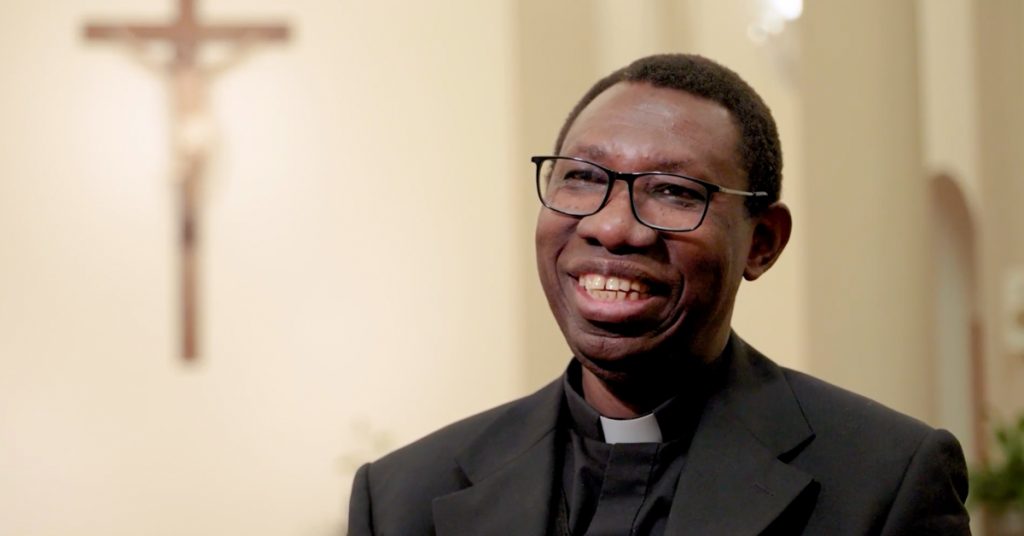
Cross Catholic Outreach: Why is it proper for charity to be front and center in the mission of the Church?
Msgr. Romanus Mbena: I believe that charity is what animates evangelization and doctrine. Charity, as we know from a theological perspective, is one of the three theological virtues … faith, hope and charity, but at the end, charity is the highest of all, and I think the pope said the work of the Church is not only teaching but also to serve the poor.
Cross Catholic Outreach: The Catholic Church teaches all of us that are baptized that we should have a preferential option for the poor. What does that mean?
Msgr. Romanus Mbena: It means that the Church, and Christians in public life, should give a preferential option to the poor when making social policies and decisions. This flows from the Catechism and theological tradition. The poor are those whose dignity and identity are most threatened today. This does not mean neglecting others — on the contrary, the goal is a just society in which everyone can enjoy the rights and fulfill the duties that come from our God-given dignity in Christ.
Cross Catholic Outreach: The Dicastery for the Service of Charity exists to address the concerns of the Holy Father when it comes to those in need. We know the dicastery addresses concerns all over the world, but where are some of the places the dicastery has helped people?
Msgr. Romanus Mbena: The dicastery has the authority of exercising his apostolate in his ministry all over the world because everywhere you have human beings, you have people who are in need, who are suffering in one way or another. Because the pope is concerned not only for the Catholics, but also because we as Christians consider everyone, every human being, to be created in the image and likeness of God, so the pope is concerned, and his care for the poor is extended to everybody.
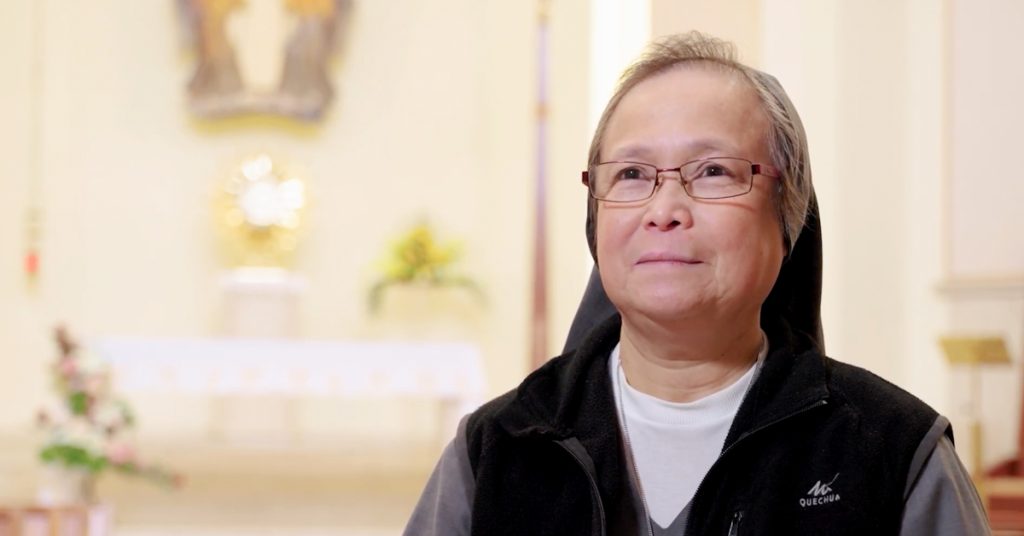
Cross Catholic Outreach: You serve as the general counselor for youth pastoral for the Daughters of Mary Help of Christians, also known as the Salesian Sisters of Don Bosco, one of the largest women’s religious institutes in the world, present in over 90 countries. For those who aren’t familiar, tell us a little bit about your religious order.
Sr. Runita Borja: Our religious order … we call it a religious congregation. We call it the Institute of the Daughters of Mary Help of Christians, and it was founded by Saint John Bosco, and the co-foundress is Saint Mary Domenica Mazzarello. Our institute was founded in a tiny town in Mornese in northern Italy, in the Piedmontese region in 1872. So, it is a congregation of consecrated women with vows who live in community and whose mission is the integral education of young people, especially girls. And we also touch the lives of their families because we believe that education is a joint effort. It’s a partnership between the institution and also the families. Our educational mission is being carried out in different settings, not only in schools, but also in nonformal and informal settings. So, wherever the young people are, we are there to educate, and this in itself is our mission.
Cross Catholic Outreach: We just recently commemorated one year since the death of Pope Francis. He liked to remind people that St. John Bosco did not shut himself up in the sacristy. It was his gentle way to remind those in ministry to go out into the streets to reach the vulnerable youth. What do you think Pope Francis’ legacy will be about reminding us all to serve the poor and the vulnerable?
Sr. Runita Borja: I believe that Pope Francis’ legacy will be his call through his words and his actions — his choice to consider the poor as our brothers and sisters. They’re not problems to be solved; they are children of God like us, living in different and probably difficult circumstances. We are called to welcome, to protect, and to integrate these people, especially the migrants, those who are at the outskirts and the margins of society, and when we consider them as the presence of God, I think we will really have a very different attitude toward them.

